
Our Solar Products & Services
We supply three things. Panels, inverters and batteries — that is the whole list. Here is what each one does, what your options are within it, and what is covered once it is installed.
Three products. One system.
Sunlight goes in at one end and usable, round-the-clock power comes out at the other. Three things do the work — and this is all three of them.
Sunlight
- 01
Panels
They make the electricity.
2 options - 02
Inverters
They turn it into power your equipment can use.
4 options - 03
Lithium Bank
They store it for night, and for outages.
3 options
Power you can use
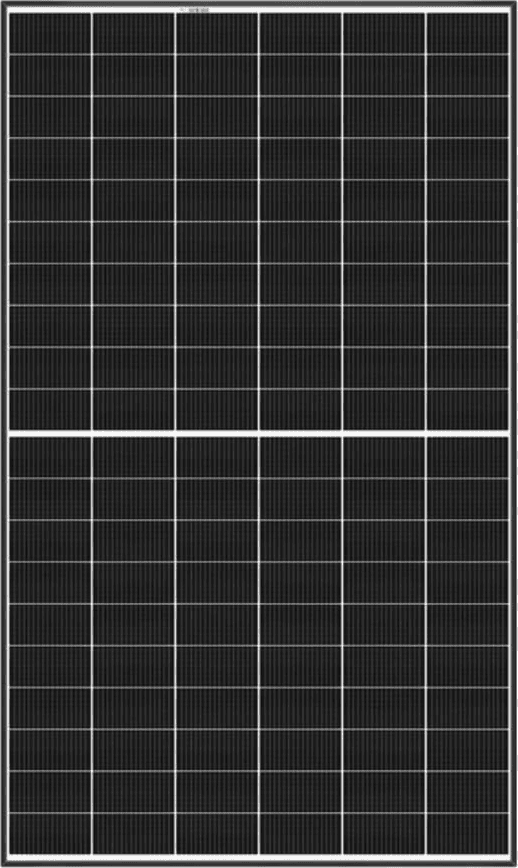
Panels
They make the electricity.
The panels are the only part of the system that actually generates. Everything after them just moves, converts or stores what they make — which is why efficiency and warranty matter more here than anywhere else.
Your options
- Highest efficiency
Mono-Facial
0%19-22%25%Cut from a single silicon crystal, so electrons meet the least resistance and each panel returns the most output per square metre we can supply. When the constraint is roof area rather than budget, monocrystalline is what gets you to your target kilowatts.
- Cost-effective solution
Poly-Facial
0%15-17%25%Cast from multiple silicon fragments. Less output per square metre, but meaningfully less cost per watt — so on a wide flat roof or a ground mount where area is not scarce, the same spend reaches payback sooner.
- Brands
- Tier-1 — premium quality from trusted manufacturers
- Warranty
- 25-year performance warranty on panels
- Certifications
- International quality standards (IEC, CE)
Inverters
They turn it into power your equipment can use.
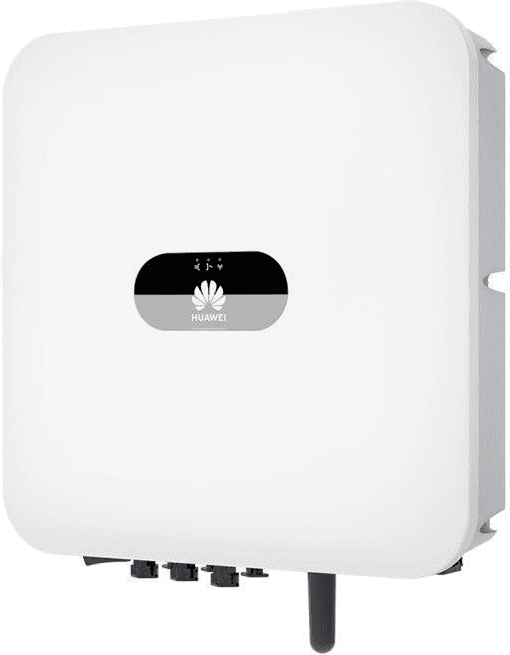
Panels produce direct current, which almost nothing in your building can run on. The inverter converts it — and the type you pick is what decides whether anything stays on when the grid goes down.
Your options
- For net metering systems
On-Grid
Synchronises with the utility supply and exports surplus generation back onto the grid under net metering. The simplest and least expensive configuration, and the quickest to pay for itself — though it shuts down alongside the grid, by design.
- Complete independence from grid
Off-Grid
Builds a supply of its own from the array and the battery bank, with no utility connection in the picture at all. This is what runs a tube well out in a field, or any site the distribution network never reached.
- Best of both worlds
Hybrid
Manages grid, array and battery together and chooses between them minute by minute — exporting when there is surplus, drawing from storage when there is not, and carrying your essential circuits straight through a shutdown.
- Panel-level optimization
Micro
One inverter behind each panel instead of one for the whole array. A shaded, soiled or failing module then costs you only that module's output rather than dragging the entire string down with it — which is what makes them worth it on broken roofs, mixed orientations, and anywhere a chimney throws a shadow.
- Brands
- Reliable international manufacturers
- Warranty
- 5-10 years manufacturer warranty
Lithium Bank
They store it for night, and for outages.
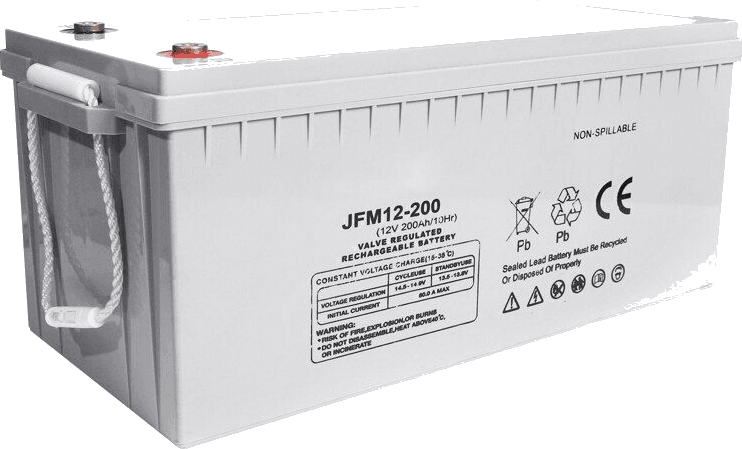
Without storage, a solar system only works while the sun is up. Batteries keep what you do not use during the day, so it is there at night and when the grid drops. Which type suits you depends on how hard the bank gets used, and how long it has to last.
Your options
- Longer life, better performance
Lithium-Ion
The most usable capacity for a given size and weight, thousands of cycles of service life, and nothing to maintain. The highest price at purchase and the lowest cost per stored kilowatt-hour across everything that follows.
- Cost-effective backup solution
Tubular
Thick tubular positive plates, built to be discharged deeply and recharged daily without degrading. Heavier, and the electrolyte needs topping up on schedule — but the entry cost is a fraction of lithium and the technology is thoroughly proven in Pakistani conditions.
- Maintenance-free operation
AGM
Electrolyte held in an absorbent glass-mat separator and sealed for life: no topping up, no venting, no acid to handle. A practical middle ground for backup duty that is not cycled hard every single day.
- Capacity options
- 100Ah to 1000Ah and beyond
- Design
- Deep cycle — optimized for solar applications
Not sure which combination you need?
That is what the site survey is for. We look at your load, your roof or land, and your budget, then tell you which of these actually belongs on your site — and which of them you can skip.
Find out what your roof is worth.
Tell us where the site is and roughly what you pay each month. We'll come back with a sized system, a generation estimate and a payback figure.